
The short and direct answer is: the frequency of dog grooming depends primarily on its breed, coat type, and the animal’s individual needs. As a rule, a dog should be trimmed every 4 to 8 weeks. This especially applies to breeds whose hair grows continuously, such as poodles, shih tzus, or yorkies. On the other hand, dogs with a double coat (e.g., labrador, husky, shepherd) primarily require intensive brushing of dead hair and undercoat, rather than shortening with clippers.
Understanding how and when to trim a dog begins with evaluating the dog’s lifestyle. If your pet spends a lot of time outside, running through forests and meadows, it requires more frequent and shorter trimming. A short coat length makes daily skin inspection easier after walks and prevents burrs from tangling. “Couch” dogs, however, can wear longer hairstyles, provided their owner takes care of daily brushing.
Breeds, coat types, and the grooming schedule
Regardless of whether you are the owner of a mixed breed or a purebred dog, proper care is the foundation of its health. For breeds requiring continuous hair shortening, dogs can be trimmed even every month to maintain their comfort. If you neglect this trimming schedule, the coat will start to tangle. This leads to the formation of mats, which directly reduces the animal’s life comfort and can lead to skin irritation or more serious skin problems.
In extreme situations, removing mats becomes necessary. This is often an unpleasant procedure for the pet, which is why we repeat to our clients: regular trimming and brushing effectively prevent the formation of mats. On the other hand, in the case of breeds with an undercoat, shaving with clippers is a huge mistake! Destroying the hair structure can lead to thermoregulation problems. A good groomer knows perfectly well how to adjust the trimming frequency to the coat type.
Should you trim your dog yourself at home or at a groomer’s?
Many owners, wanting to save time or money, wonder whether to trim their dog themselves at home. Currently, various home accessories are available on the market, and professional clippers tempt with easy access. However, before you decide to trim your dog yourself, you must consider your dog’s safety and stress. An accidental skin cut – especially in a squirming dog – can cause tremendous stress and fear of any procedures in the future.
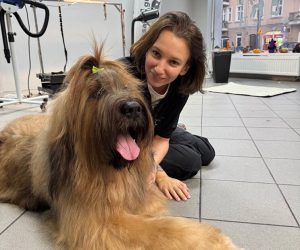
From our salon’s practice: last month, a Maltese came to us after home cutting attempts – the dog was terrified of scissors. Our specialist, Julia, had to spend a lot of time just working on trust. At Bruno Grooming, we have a strict rule: we do not use any sedatives. We rely exclusively on patience, gentleness, and empathy. Furthermore, we have an open, glass-fronted salon, so owners can see that we hide nothing and focus on a stress-free approach. If you want to be sure that the trimming process will go in a calm atmosphere, we recommend our professional dog trimming.
The role of a professional groomer: why is it so important?
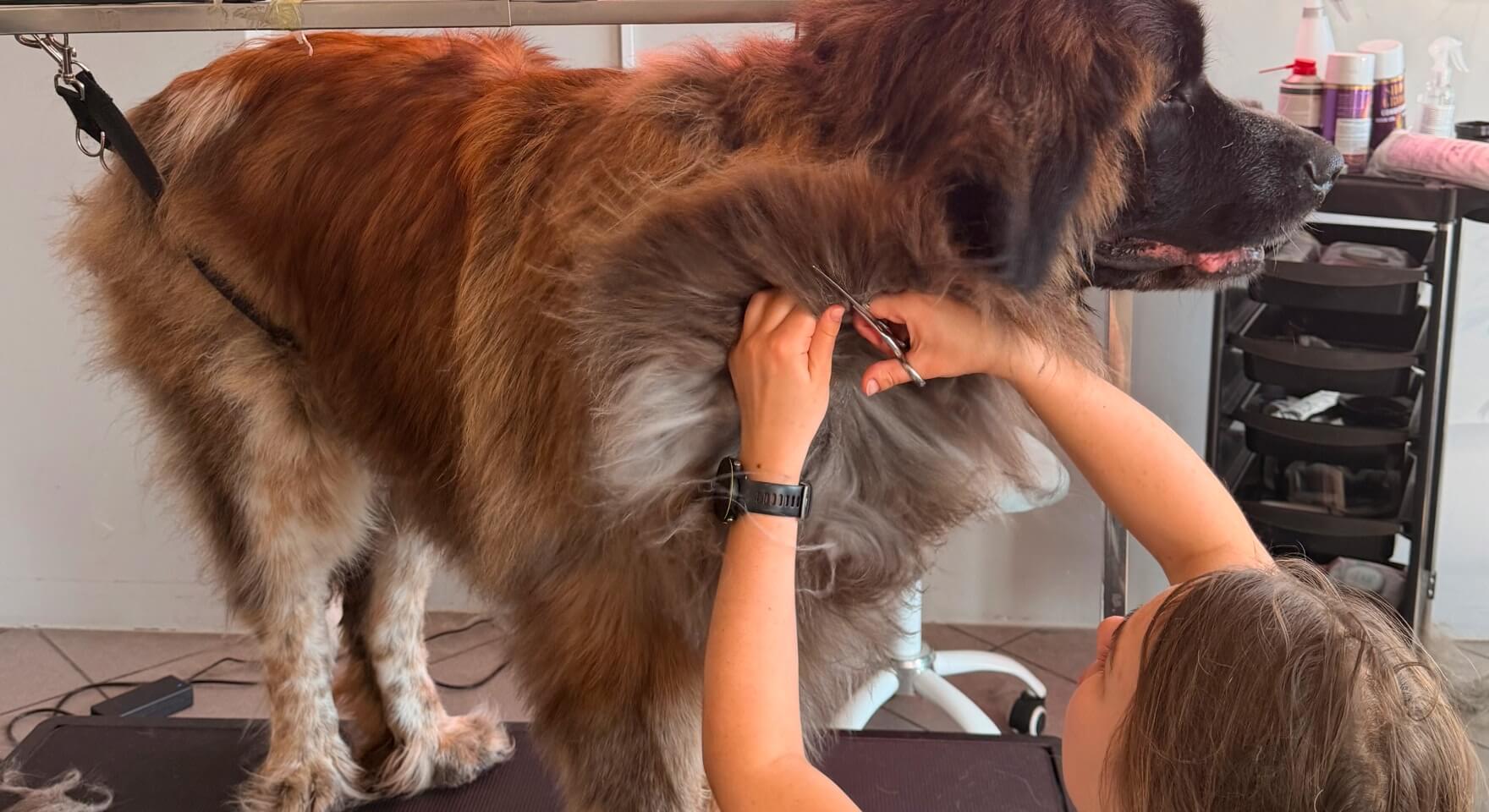
Visits to the groomer are much more than just visual dog coat care. A regular grooming procedure allows you to assess and control the condition of the epidermis, teeth, or claws. When cutting claws, it is extremely important to cut them at the right angle (approx. 45 degrees) from bottom to top, paying attention to the quick to avoid bleeding.
Even in the case of a short coat, more frequent trimming or a deep de-shedding bath plays a huge role, especially when seasonal shedding is approaching. In our salon, we always use a double wash – first with a cleansing shampoo, and then one selected for the coat type, which makes the coat’s appearance simply flawless.
Remember that not only long-haired dogs require regular trimming. To keep the coat clean and ensure the dog’s hygiene, skilled hands and knowledge of how to operate tools depending on hair length are essential. If you are looking for a place that will take care of your pet at the highest level, we invite you for professional grooming in Poznań at 182 Głogowska Street. We will help choose the right hairstyle for the animal’s needs and achieve the ideal dog coat length so that a healthy coat is always its showpiece!