
Cat brushing — why it’s worth it and when a groomer is needed
September 9, 2026
Read
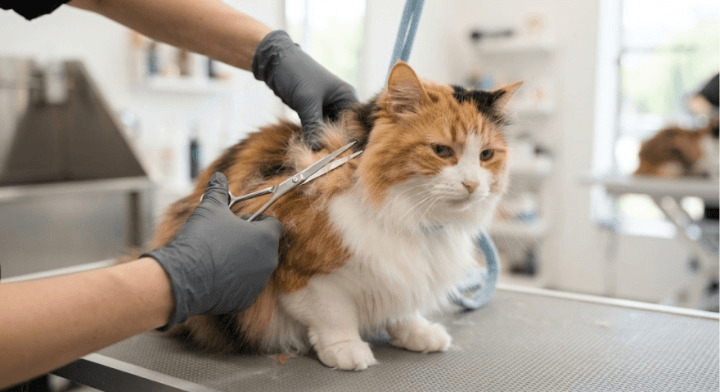
When cat mats appear on the body, the only fully painless way to safely remove mats in a cat is by using specialized combs, and in difficult cases, precise clippers. Never cut them out with scissors! At Bruno Grooming, we remove cat mats exclusively with immense patience, absolutely without administering anesthesia or pharmacological sedatives – just like we perform ultrasonic teeth cleaning or nail clipping with clippers from below (at a 45-degree angle, strictly avoiding the quick). Every professional cat groomer in Poznań knows perfectly well that force and haste are a kitty’s biggest enemies. Grooming should bring relief, not pain.
The problem begins when the shed undercoat and dead guard hairs start tangling together. The result is hard, matted fur that completely blocks oxygen access to the epidermis. In long-haired breeds, this phenomenon can escalate in just a few days.
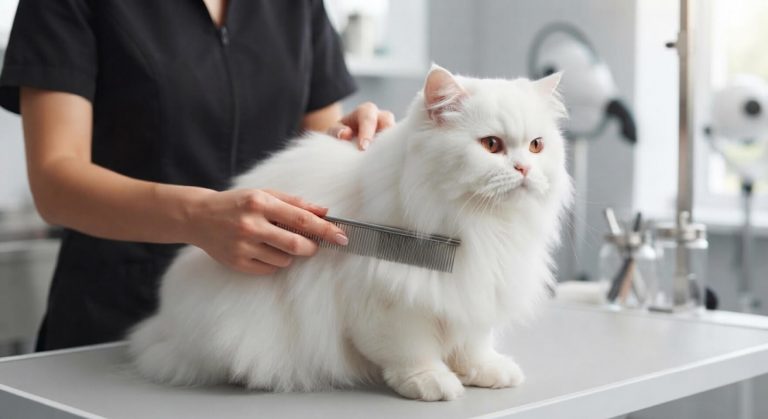
Breeds such as the Persian, Maine Coon, or the popular Ragdoll possess a unique coat structure. Their dense undercoat is characterized by hair that is incredibly thick and soft to the touch, while the guard hair often resembles the structure of thick and stiff bristle. This specific double layer causes hairballs and hard mats to form almost instantly, especially during the shedding season when the pet begins to shed massively. Difficult long hair requires that brushing a cat be done with great attention to maintain a healthy coat and the aesthetics of each cat. On the other hand, a short-haired cat less often mats visibly on the outside, but sheds dead fur just as intensively, which requires brushing.
Even the biggest enthusiasts and experienced representatives of cat owners are surprised that despite superficial stroking of the pet with a brush, mats still lurk deep down. Understanding what the most common causes of mats are allows you to better plan cat grooming at home.
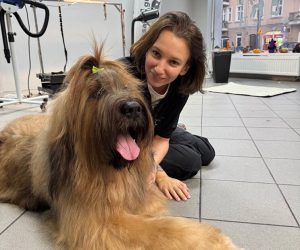
From the practice of our Bruno Grooming salon – which is often emphasized by our master groomer Julia – it is clear that mats tie up fastest in areas of constant friction. Behind the ears, under the armpits, and on the pantaloons – there, the soft fur is subject to constant kneading. The skin under a mat suffers from painful chafing, which causes gigantic discomfort. This limits the cat’s range of motion and ultimately provokes secondary health problems.
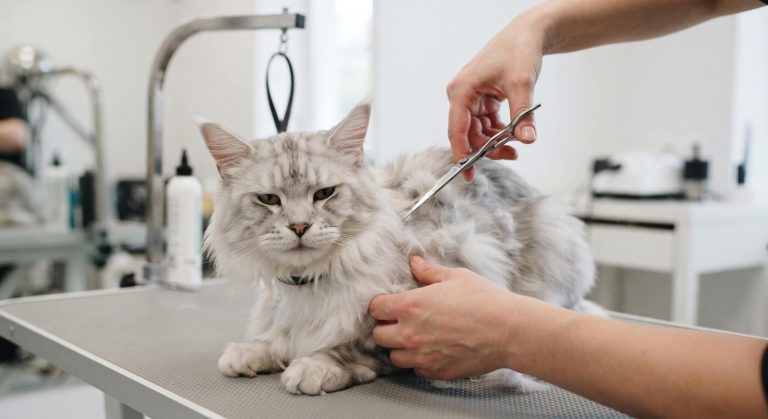
Owners often try to force comb cat mats with a hard slicker brush. Wanting to effectively get rid of them, some also reach for kitchen or office scissors. This is a huge mistake! Cat skin is extremely thin, elastic, and pulls up firmly along with the fur. The risk of cutting clumped hair with classic scissors is so great that in a fraction of a second and with one tug, you can deeply cut the pet’s skin.
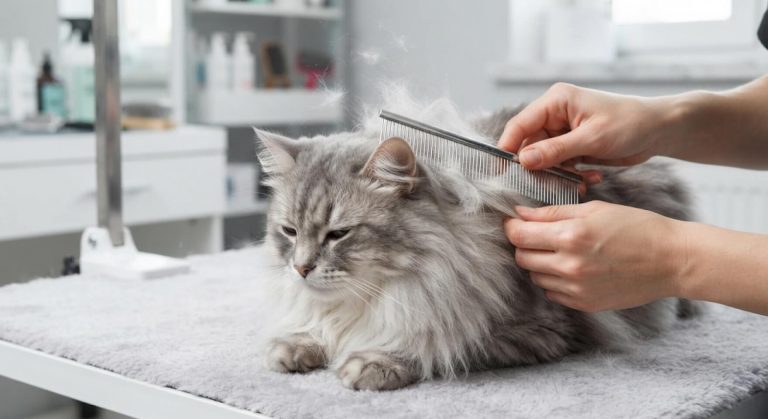
Ordinary cat brushing only works prophylactically. When a tight lump is felt on the body, gentle brushing makes sense only with early tangles. You should use metal combs and appropriate tools with rotating teeth, always trying to avoid pulling (you must firmly secure the cat’s fur with your fingers right at the base). However, if very clumped fur has already formed, the brush will pull out hairs with their bulbs. In such situations, the only safe way out is professional help and comprehensive cat grooming.
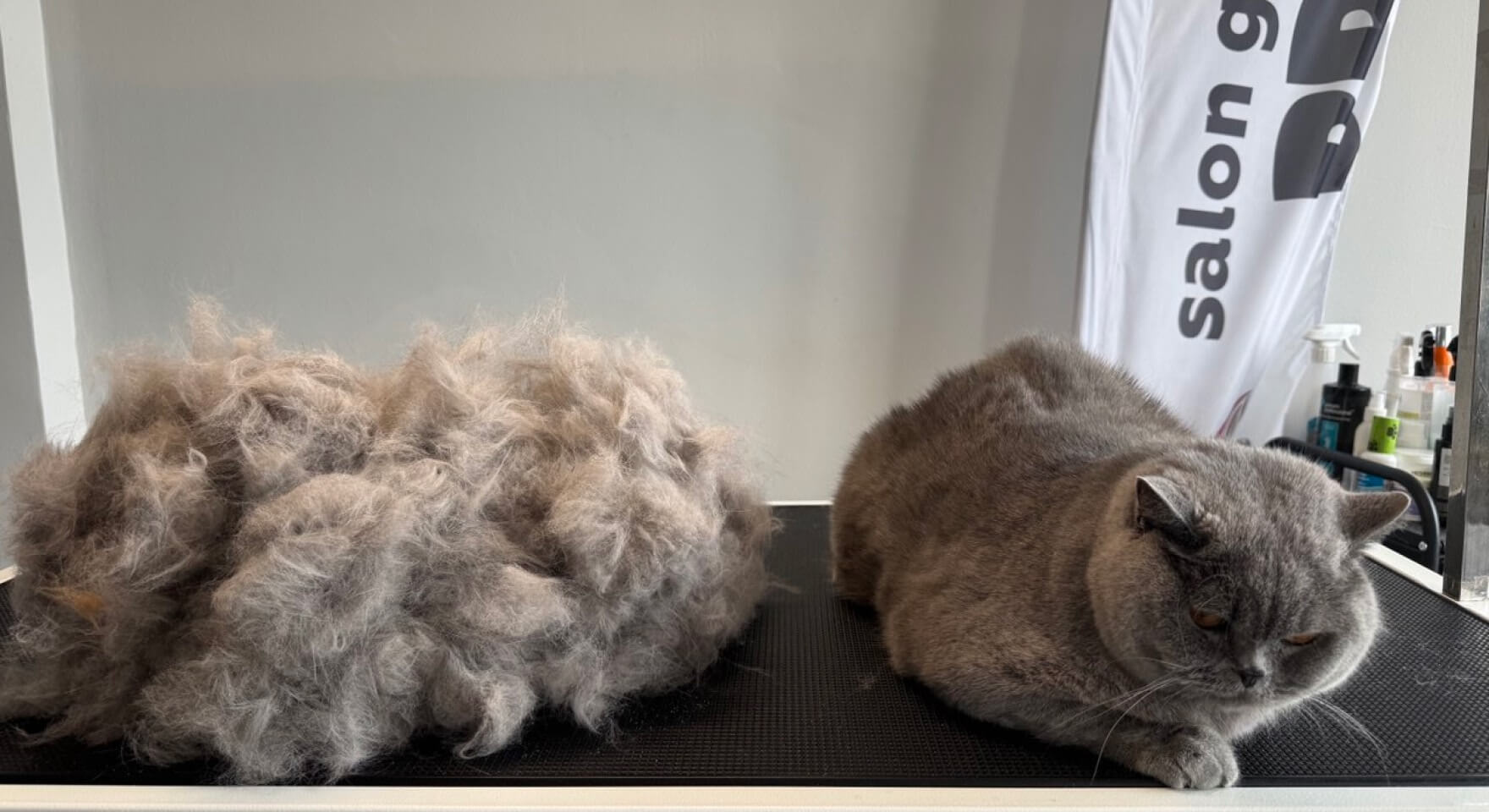
In the past quarter, a kitty in a complete “felt armor” came under our scissors. The owners were terrified of how their blocked pet would endure the visit. Our absolute priority at such moments is to restore physical relief to the animal, not a competition hairstyle. Proper cat grooming excludes forceful jerking.
When the mat drastically and tightly adheres to the epidermis, shaving the cat is necessary, i.e. trimming a long-haired cat with clippers with a suitably short blade under the hard shell. Attempts to brush out such places would cause unimaginable pain and immense stress to the cat. In less advanced cases, we only perform local hygienic cat trimming (e.g., shaving the intimate areas and groins). If we notice wounds under the matting, our recommendation sounds firm: consult a veterinarian or go for a visit to a trusted veterinarian. Sudden and extremely tangling fur is also worth consulting at a clinic, because the disappearance of auto-grooming (washing) is sometimes the first symptom of joint pain or mouth disease.
To effortlessly prevent the formation of mats in a cat, commitment at home is necessary. Proper and daily coat care is a guarantee of no problems.
To consciously prevent their formation, proceed methodically. Regular brushing is the pillar of the routine. Brush the long coat of Persians every day, and cats with shorter but thick hair – at least twice a week to keep the coat in good condition. Choosing the right brush is fundamental – popular rubber gloves collect hair from the top, but it’s the long pins of a slicker brush that deal with the fluff. Exemplary care between visits allows you to painlessly remove dead shedding and prevent the formation of mats, limiting the risk of matting to almost zero. Just brush the cat systematically using rewards, and your feline companion will accept this process.
Before you book your cat with us, we encourage you to read: how to prepare a pet for a visit to the groomer. Cats react definitely more strongly than dogs to a new space. The most serious mistake is attempting to forcefully cut out mats at home on the day of the visit, which only unnecessarily heightens your pet’s fear. Bring the cat in a comfortable, stable carrier with a blanket smelling of its home territory.
Any problems with mats can be successfully controlled and eliminated. Understanding how to effectively prevent matting processes in long-haired cats, and technically matching tools and brushes to the coat type (both in the intensive coat replacement season and in winter), gives the kitty regular comfort. Always hand over clumped places difficult to comb and blocked cat mats to specialists. Take care of your four-legged friend’s welfare so that professional visits and brushing moments always take place in a calm, understanding atmosphere!