
How to prepare your dog for a groomer visit?
March 27, 2026
Read


Prices depend on the breed, size and condition of the animal's coat
Dog and cat grooming is a topic on which pet owners tend to ask surprisingly similar questions — yet arrive at completely different answers. How often should you bathe them? Is trimming always necessary? And why does a dog look so different after a salon visit compared to a cat after the same procedure? The articles in this category provide concrete information about caring for both species — without conflating rules that work in entirely different ways for dogs and cats.
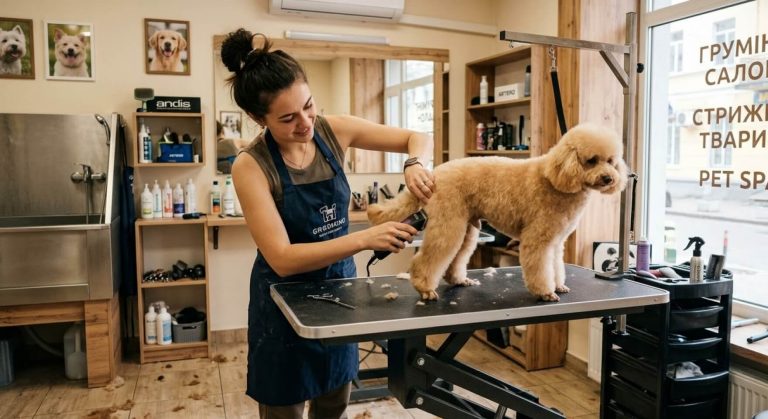
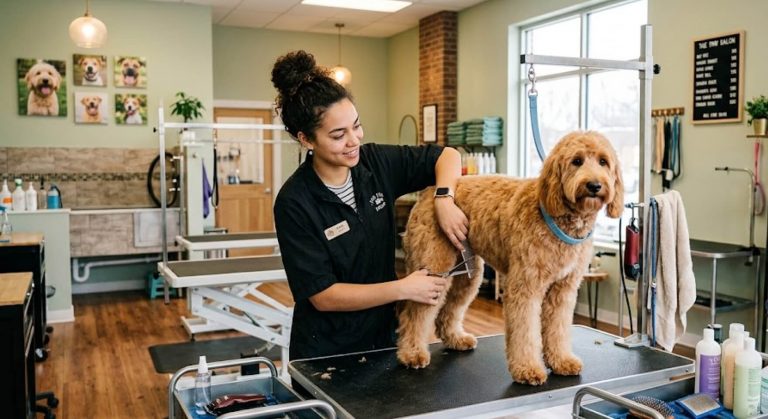
Not every visit to a grooming salon looks the same. A poodle needs a trim every 6–8 weeks because its coat grows continuously and, without scissors, turns into dense mats. A husky needs no trimming at all — but deshedding, the removal of dead undercoat, is essential, particularly in spring and autumn when shedding is at its most intense.
A dog groomer tailors the scope of each visit to the breed and the current condition of the coat. Bathing and grooming a dog do not always involve the same set of tasks: for a boxer, a bath, blow-dry, and ear cleaning are sufficient, while a Bernese Mountain Dog requires lengthy undercoat brushing and attention to hygiene areas. An owner who understands these differences plans visits more effectively and is less likely to arrive at the salon with a dog in urgent need of intervention rather than routine maintenance.
Frequency matters too. How often you visit a grooming salon differs between shedding breeds and breeds with continuously growing coats. For the former, every 6–10 weeks is typical; for the latter, the interval may be shorter, depending on how quickly the coat loses its shape.
Cat grooming is an entirely different world from working with a dog — not only technically, but above all in terms of how you approach the animal. Cats groom themselves, which leads many owners to put off a salon visit until the matts are already dense and hardened. With Persians, Maine Coons, and Ragdolls, that point can arrive surprisingly quickly — a matt behind the ear forming within two weeks without brushing is far from unusual.
Bathing a cat requires a different pace and a different spatial setup than bathing a dog: less noise, fewer stimuli, less time under the dryer. A skilled cat groomer knows that rushing is the worst possible approach here — the stress of a first visit can shape how a cat responds to the salon for years to come.
Caring for long-haired cats also means working between visits. Daily brushing for a Persian is not an exaggeration — it is a prerequisite for the next salon visit being a tidy-up rather than a rescue operation after weeks of neglect.
Owners who have both a dog and a cat at home often look for one place where they can take care of both. That is convenient — but it is worth knowing that grooming two species in the same salon demands skills and conditions from the groomer that do not always go hand in hand. A cat surrounded by dogs faces potential stress that directly affects the quality of the visit.
At Bruno Grooming, dog and cat appointments are organised in a way that minimises contact between species — not because the two are impossible to accommodate together, but because an animal’s calmness during grooming has a direct impact on the result and on whether the pet will return without resistance next time.
Professional dog and cat grooming is also a matter of careful observation. During a visit, a groomer sees the animal differently from how the owner sees it every day — assessing the skin, evaluating coat condition, and noting redness, dandruff, or signs of excessive shedding. These details, spotted during regular visits, make it possible to catch the early signs of dermatological or general health issues before they become serious.
Dog and cat grooming is a subject that brings together knowledge of breeds, coat types, and animal behaviour. The articles in this category will help you better understand your pet’s needs and make informed decisions about when and how to care for their coat and overall wellbeing.
For breeds with continuously growing coats — such as poodles and schnauzers — a full package is recommended every 6–8 weeks. For shedding breeds like huskies and golden retrievers, the optimal frequency is every 8–10 weeks. Long-haired cats, such as Persians and Maine Coons, need a visit every 6–12 weeks, depending on how regularly the owner brushes them at home.
No — bathing is an integral part of the grooming visit and always takes place at the salon. Washing the animal at home just before the appointment can actually cause harm: incompletely dried coat is more prone to matting, and damp hair is harder to cut evenly.
Start getting the cat used to the carrier and short car rides a few weeks before the appointment. At home, gradually accustom it to being touched — brushing it and handling its paws and ears. The calmer the cat is at the first visit, the smoother all subsequent visits will be.
Yes, although the scope of the visit differs from that of long-haired breeds. A short coat does not mean no maintenance is required — a boxer, a Labrador, or a short-haired domestic cat all need regular bathing, ear cleaning, claw trimming, and skin checks. During such a visit, the groomer can spot skin changes that the owner simply does not notice in everyday life.