

What is dog grooming and why does it matter?
March 3, 2026
Read


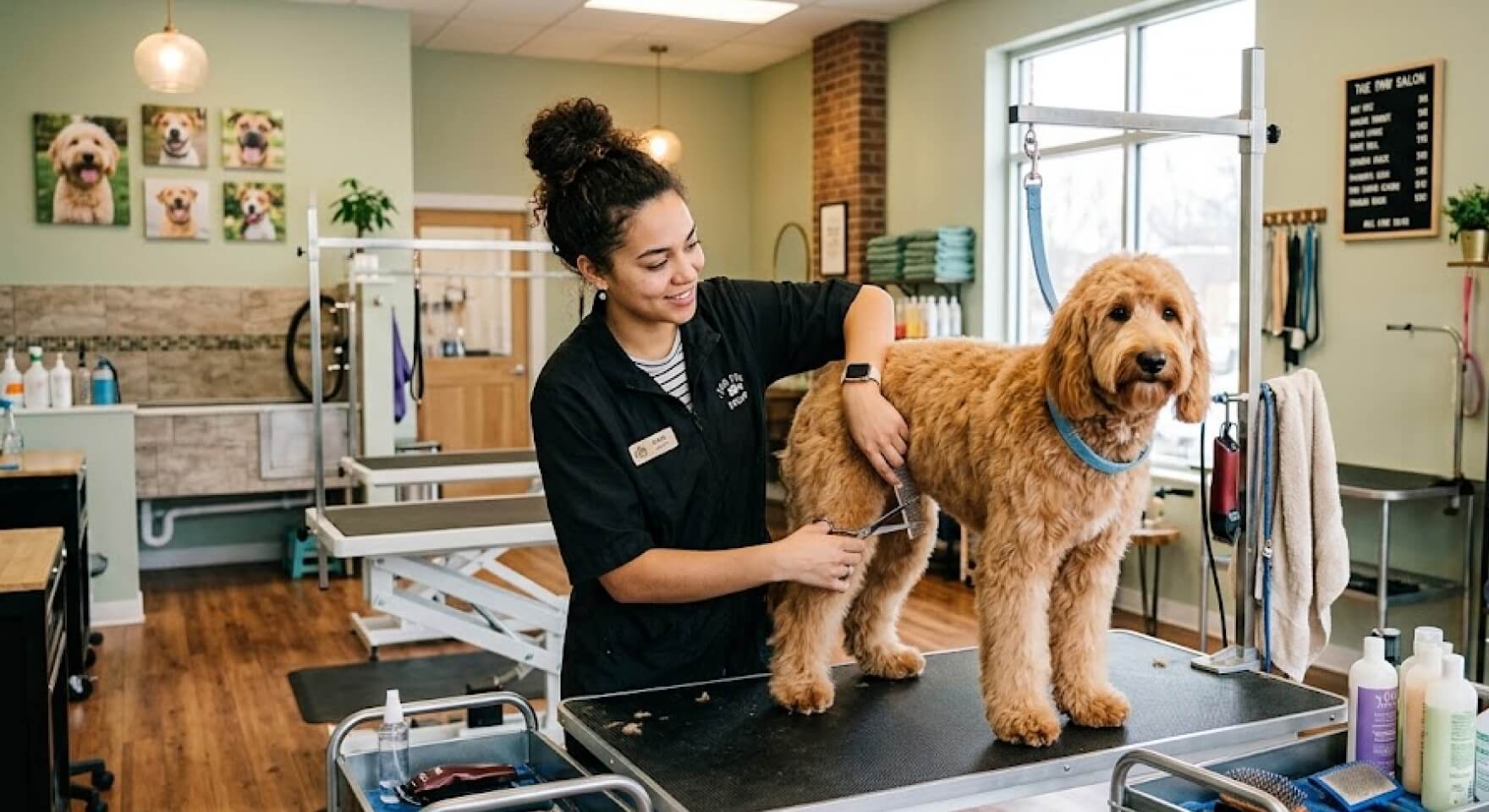
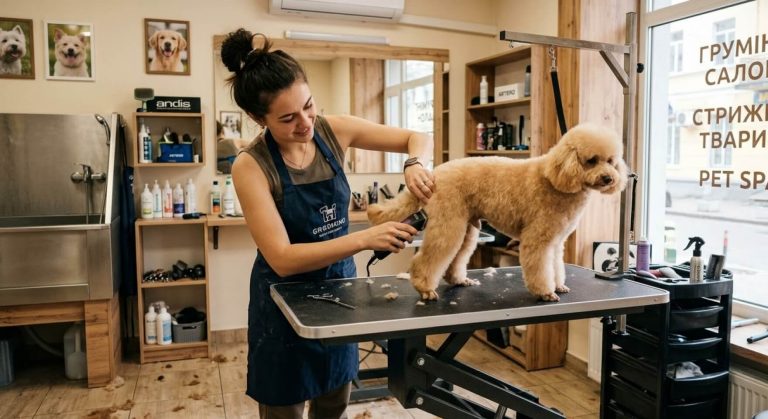
A groomer in Poznań can do a great deal — but not everything depends on them. A dog that arrives at the salon frightened, tense, and completely unprepared will resist every touch — and a visit that should take an hour will stretch to two. Good preparation starts at home, weeks before the first appointment, and has more to do with everyday habits than with the day of the trim itself. In this article we explain what an owner can do to make the salon visit go smoothly — for the dog and for the groomer.
A dog’s stress during a grooming visit usually does not come out of nowhere. The dog is afraid of having its paws, ears, and muzzle touched because nobody previously taught it that this kind of contact is normal and safe. Puppies should be introduced to these areas from the very first weeks at home.
A few minutes a day is enough. Gently massaging the paws while watching television, checking the gums during play, touching the area around the ears and tail for no particular reason — all of this builds a tolerance for touch that pays off for years. A dog that has grown used to this at home reacts very differently when the groomer does the same thing at the salon.
It is also worth getting the dog used to the sound of a hair dryer. Try turning it on in the background, a few metres away, during feeding time — so the dog associates the sound with something pleasant rather than threatening. Helping the dog adapt to the sounds and stimuli typical of a salon is one of the simplest things an owner can do independently.
Transporting the dog is a part of the visit that many owners underestimate. A dog that gets carsick or barks the entire journey arrives at the salon already tired and overstimulated. How the dog behaves in the car affects how the visit begins — and stress accumulated on the way is difficult to dissipate in the first minutes at the grooming table.
If the dog is not used to car travel, it is worth taking short trips with no particular destination beforehand — so that the car does not become associated exclusively with veterinary or grooming stress. Dog safety in the car is also a practical matter: a dog secured with a harness or travelling in a crate is calmer than one charging between the seats.
It is a good idea to arrive a few minutes early and give the dog a short walk before entering the salon. A dog that has relieved itself and had a little exercise enters more calmly. It is a small thing — but groomers notice the difference.
Before handing the dog over to the groomer, it is worth checking the coat at home. Not to brush everything out yourself — but to know what the groomer will find and to flag any potential issues. A matt behind the ear that the owner felt while stroking the dog is worth mentioning straight away — the groomer will plan the work differently and avoid unnecessary pulling.
It is also important to inform the salon about the dog’s health. Joint problems, sensitive skin, allergies to shampoo ingredients, separation anxiety — this is information that changes how the groomer approaches the work. Grooming a dog with hip dysplasia looks different from caring for a healthy animal: the groomer needs to know how to position the dog and which postures to avoid.
Puppies are a separate case. The first visit does not have to include a full trim — sometimes a bath, a blow-dry, and a brief introduction to the tools is enough. The goal is familiarisation, not a finished result. A groomer who understands this does not rush and does not push the procedure to completion at all costs.
The dog should arrive at the salon after a walk — not straight after a meal. A full stomach during bathing and being lifted onto the table can be uncomfortable and sometimes leads to vomiting. It is better to schedule the visit at least an hour after the dog has eaten.
There is no need to wash the dog at home before the visit. This is a common impulse — owners want to bring a clean dog — but damp coat already starts to tangle as it dries, and the groomer will end up working with more difficult material. Bathing and grooming a dog carried out at the salon are more effective than home washing precisely because the groomer controls the entire process from start to finish.
It is also worth bringing the dog’s favourite treat. Some salons allow owners to leave treats for the groomer to give during the procedure — this is an effective way of building positive associations with the visit, especially for dogs attending the salon for the first time.
A puppy between 12 and 20 weeks of age is in the so-called socialisation window — the period during which it is easiest to get used to new places and people. This is the best time for a first groomer visit, even if the dog does not yet need trimming. The aim is to make the salon a familiar place rather than an unknown one.
A puppy’s first visit takes longer than a standard appointment: the groomer takes breaks, lets the puppy sniff the tools, and does not push through any step if the puppy is clearly resisting.
When looking for a groomer in Poznań for a puppy, it is worth asking directly how the salon approaches first visits. Bruno Grooming at ul. Głogowska 182 works without sedatives and at a pace adapted to the individual animal — which is especially important for first visits. A well-prepared dog means a calmer visit, a better result, and less stress — for the dog, the owner, and the groomer alike.