

How to prepare your dog for a groomer visit?
March 27, 2026
Read


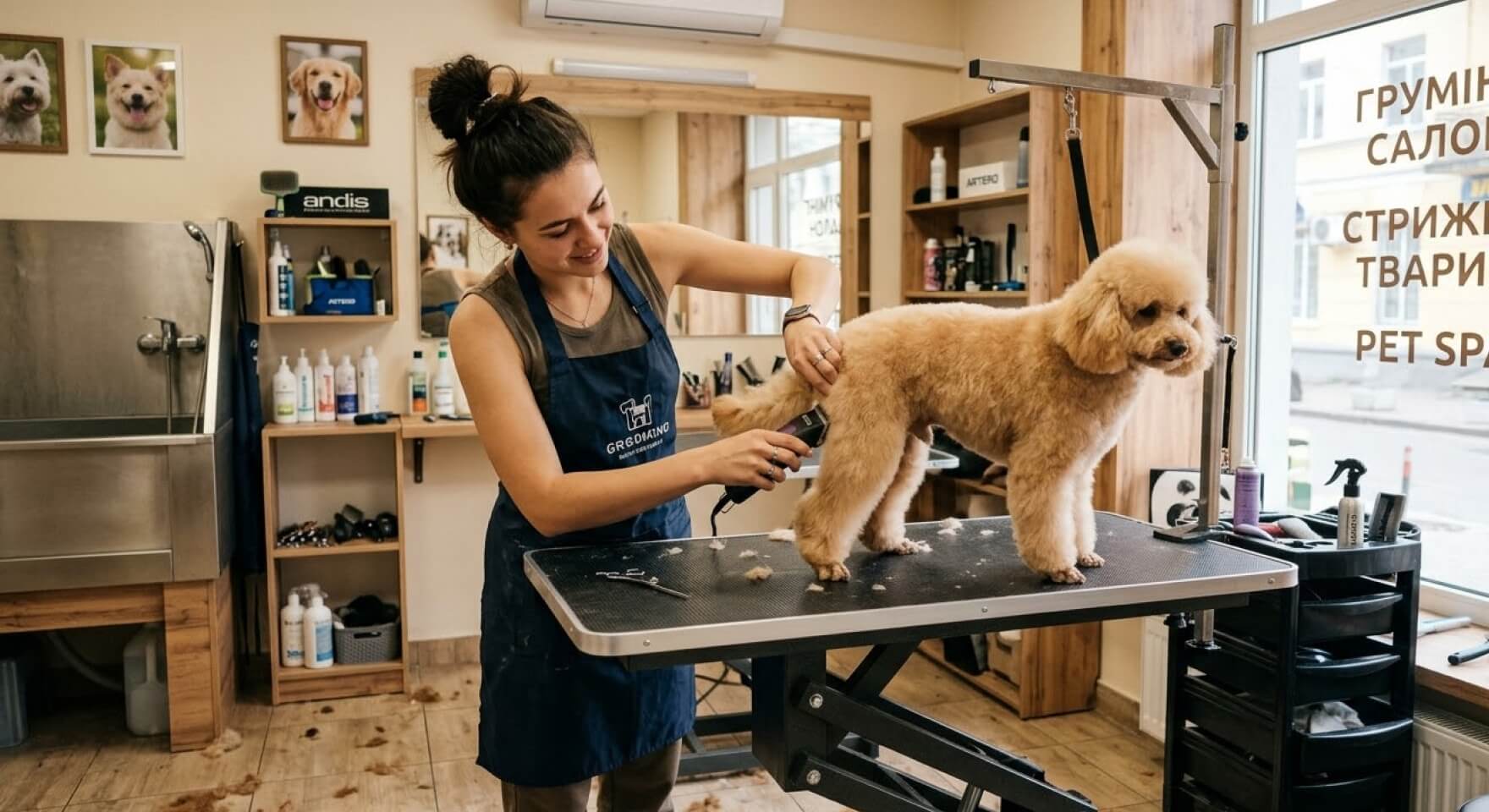
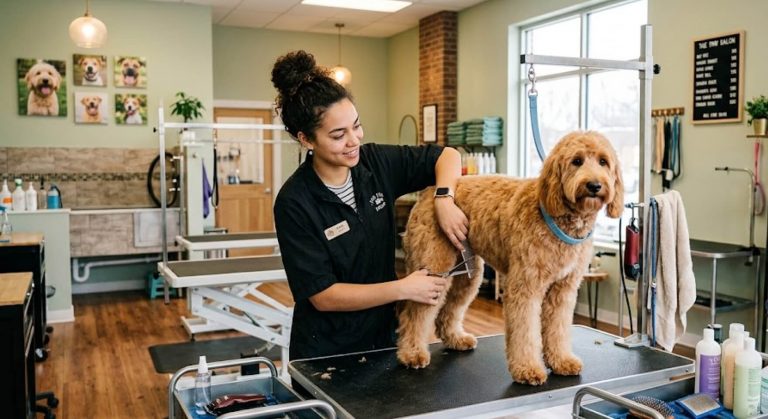
Grooming services are associated by many owners with a haircut and a smart appearance — and it is this association that leads some dogs to visit the salon once a year, before a show or before the holidays. In reality, grooming is regular care for the animal’s skin, coat, claws, and hygiene — something that even the most thorough home washing cannot replace. In this article we explain what a full dog grooming session involves, how individual procedures affect the animal’s health, and when it is worth entrusting this work to someone with experience.
Grooming is not a single procedure. It is a set of actions that together make up complete care for a dog — from nose to tail. The foundation is a bath with a carefully chosen shampoo and conditioner, blow-drying with directed airflow, and brushing out dead hair. This is not the same as washing under the shower at home — the difference is visible to the naked eye after the very first salon visit.
On top of this comes trimming or hand-stripping — depending on the breed — as well as coat care between the toes, tidying up the area around the ears and tail, and cleaning the dog’s ears. The ears are the area owners neglect most often. In breeds with long, drooping ear flaps, such as cocker spaniels and basset hounds, moisture builds up quickly in the ear canal and encourages infection.
The full range of grooming services also includes checking the skin condition during the bath. The groomer sees the dog differently from the owner — examining the whole body in good light, parting the wet coat with their hands and noticing what goes undetected in daily life: new skin changes, irritations, parasites, or abnormal claw growth.
A dog’s skin health depends directly on how often and how well it is washed. Skin that is washed too infrequently accumulates sebum, dead skin cells, and dirt — an environment in which bacteria and yeasts thrive. On the other hand, bathing too frequently or with the wrong shampoo disrupts the protective lipid barrier and leads to dryness.
The right bathing schedule depends on the breed and the dog’s lifestyle. A dog that runs through the forest every day needs washing on a different basis from an apartment dog with short walks. But for most breeds the optimal frequency is every 4–6 weeks — and it is worth aligning salon visits to this rhythm rather than waiting until the dog starts to smell.
Water temperature and drying time also matter. A coat that stays damp for several hours after bathing — especially in dogs with a dense undercoat — is a direct route to skin irritation and fungal infection. A dryer with adjustable airflow, as used by the groomer, dries the coat evenly, from the outside in.
Claw trimming is the procedure owners put off the longest. The reason is simple: they are afraid of hurting the dog. With black claws the blood vessels are invisible, and an accidentally too-deep cut ends in bleeding and stress — for both the dog and the owner. After such an experience, many dogs start defending their paws at any attempt to touch them.
Yet claws trimmed regularly every 3–5 weeks are easier to cut because the blood vessel recedes along with the claw. Claws that are too long alter the biomechanics of the dog’s gait — the dog shifts its weight onto the back of the paw, loading the joints over the course of years. It is a problem that begins quietly and ends at the vet.
Teeth cleaning for dogs is gradually becoming part of grooming practice, and many salons already offer mechanical tartar removal without anaesthesia. It is a preventive procedure — it does not replace veterinary scaling, but it slows the build-up of tartar and helps maintain fresh breath. Dogs whose teeth are cleaned regularly from puppyhood tolerate the procedure without resistance.
A dog that visits the salon regularly gets used to being touched in places it would normally dislike — paws, ears, muzzle, the area around the tail. This habituation has practical value: the dog submits more easily to veterinary examination, does not react aggressively to children touching it, and tolerates care at home between visits.
The dog’s comfort grows with each subsequent visit — provided every one of them was calm. A puppy’s first trim takes longer than a standard visit because the groomer takes breaks, gives the dog time to settle, and does not force the procedure to a conclusion. This patience has a cost — but it pays off over years of visits during which the dog walks into the salon without pulling on the lead.
Regular groomer visits are not spending money on aesthetics. They are preventive care that avoids costly interventions — removing matts, treating skin infections, and dealing with the orthopaedic consequences of neglected claws. Regular care is cheaper than a one-off matt removal session, and the visit pays for itself in a healthy coat throughout the year.
Owners who treat grooming as a routine rather than an exception visit the vet less often with skin problems and less often hear from the groomer that the dog needs to be shaved rather than trimmed. A visiting rhythm of every 6–8 weeks is the minimum for long-haired breeds — and the starting point for drawing up a care plan for any other breed.
If you are looking for reliable grooming services for your dog in Poznań, Bruno Grooming will be happy to advise which procedures are needed for a specific breed and how often to plan visits so that your dog stays in good condition all year round — without emergency interventions and unnecessary stress.